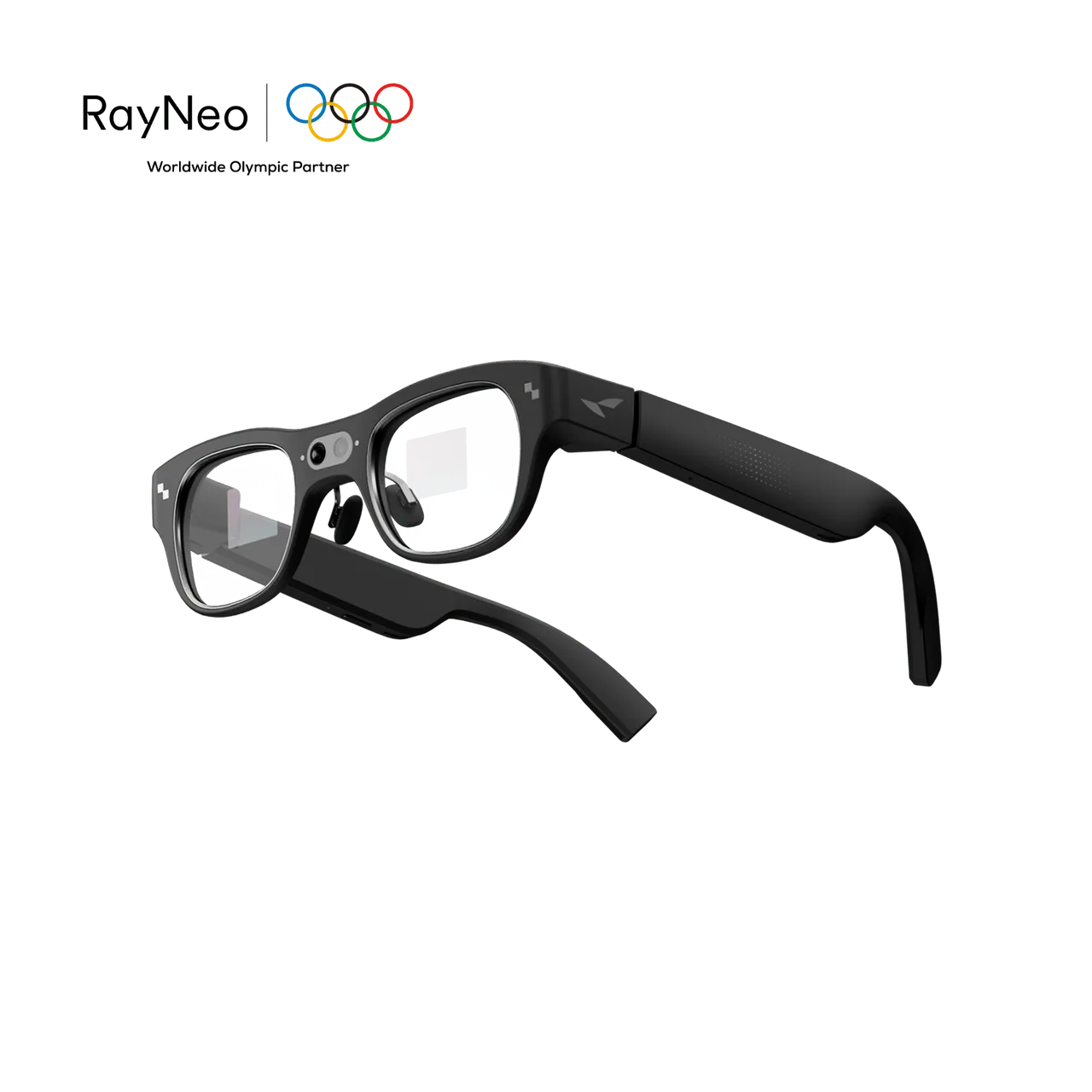
RayNeo X3 Pro
Standalone AI+AR glasses with a binocular full-color display, camera, translation, navigation, and spatial developer tools.
Brand
RayNeoReference Price
$1,299 US reference
Reference price; regional pricing and bundles may differ.
Consumer Electronics Details
Product type
Standalone AI and augmented-reality smart glasses
Core feature
Binocular full-color MicroLED waveguide display with onboard compute, cameras, AI, translation, and navigation
Connectivity
Wi-Fi 6, Bluetooth 5.3, and USB 2.0 Type-C
Compatibility
Standalone operation; phone remains useful for setup, hotspot access, and supported companion features
Key Facts
Display
640 × 480, 30° field of view, 3,500-nit average and 6,000-nit peak brightness
Platform
Snapdragon AR1 Gen 1, RayNeo AIOS, 4GB RAM, and 32GB storage
Cameras
12MP Sony IMX681 main camera plus an OV spatial camera
Battery / charging
245mAh battery; USB-C full charge rated at about 38 minutes
Tools
14-language translation, heads-up navigation, transcription, teleprompter, selected apps, and 6DoF + SLAM creator mode
Weight
76 ± 1g
Product Overview
RayNeo X3 Pro puts a bright binocular MicroLED waveguide display, Snapdragon compute, cameras, and its own battery into a 76g frame. Translation, navigation, prompts, and selected apps can appear across both eyes without a tethered display source. Long-term reviewers found the display genuinely useful, but the small battery, conspicuous frame, high price, and developing software ecosystem make this a short-session early-adopter tool rather than all-day eyewear.
What Stands Out
Both eyes receive a 640 × 480 full-color waveguide image with a 30-degree field of view, while onboard compute supports translation, navigation, transcription, selected apps, and 6DoF experiments.
Why It Matters
It shows consumer AR moving beyond phone-tethered display glasses toward wearable computers that can see, process, and place information in the user's view.
Best For
AR developers, early adopters, and professionals with a specific short-session need for translation, prompts, navigation, or hands-free notes.
Not For
Anyone who needs discreet all-day eyewear, predictable multi-hour active use, a mature app ecosystem, or a mainstream price.
Things to Know
The $1,299 figure is a US official reference checked on September 1, 2026. Confirm regional support, taxes, prescription-lens cost, return terms, and current availability.
Active features draw heavily from the 245mAh battery. Android Central's month-long test reported less than 30 minutes in its active-use pattern, while endurance varies with display, camera, AI, navigation, wireless, and app use.
Display alignment and comfort depend on face shape and fit. Prescription inserts are separate, and the cameras and projector housings make the frame visibly technical.
A phone remains useful for setup, hotspot access, and companion features. Some apps require manual installation or developer tools, and availability can vary by region, network, software version, or OTA update.
Sources
RayNeo product page
rayneo.com
Covers
Exact model identity, current US price, display, processor, memory, storage, cameras, microphones, battery, charging, weight, connectivity, controls, translation, navigation, developer mode, prescription route, and official imagery.
RayNeo company page
rayneo.cn
Covers
Shenzhen company identity, address, TCL Communication innovation-lab origin, product focus, and official support channels.
TechRadar review
techradar.com
Covers
Extended hands-on evidence for display quality, weight, camera, fit, active endurance, software workarounds, price, and early-adopter use.
Tom's Guide review
tomsguide.com
Covers
Two-month use covering AIOS, live AI, navigation, apps, camera, comfort, conspicuous styling, setup, and battery behavior.
Android Central review
androidcentral.com
Covers
Month-long use covering translation, outdoor display, controls, audio, camera, fit, active battery life, connectivity, stability, and firmware improvements.
Similar Products
Explore related products
Consumer Electronics
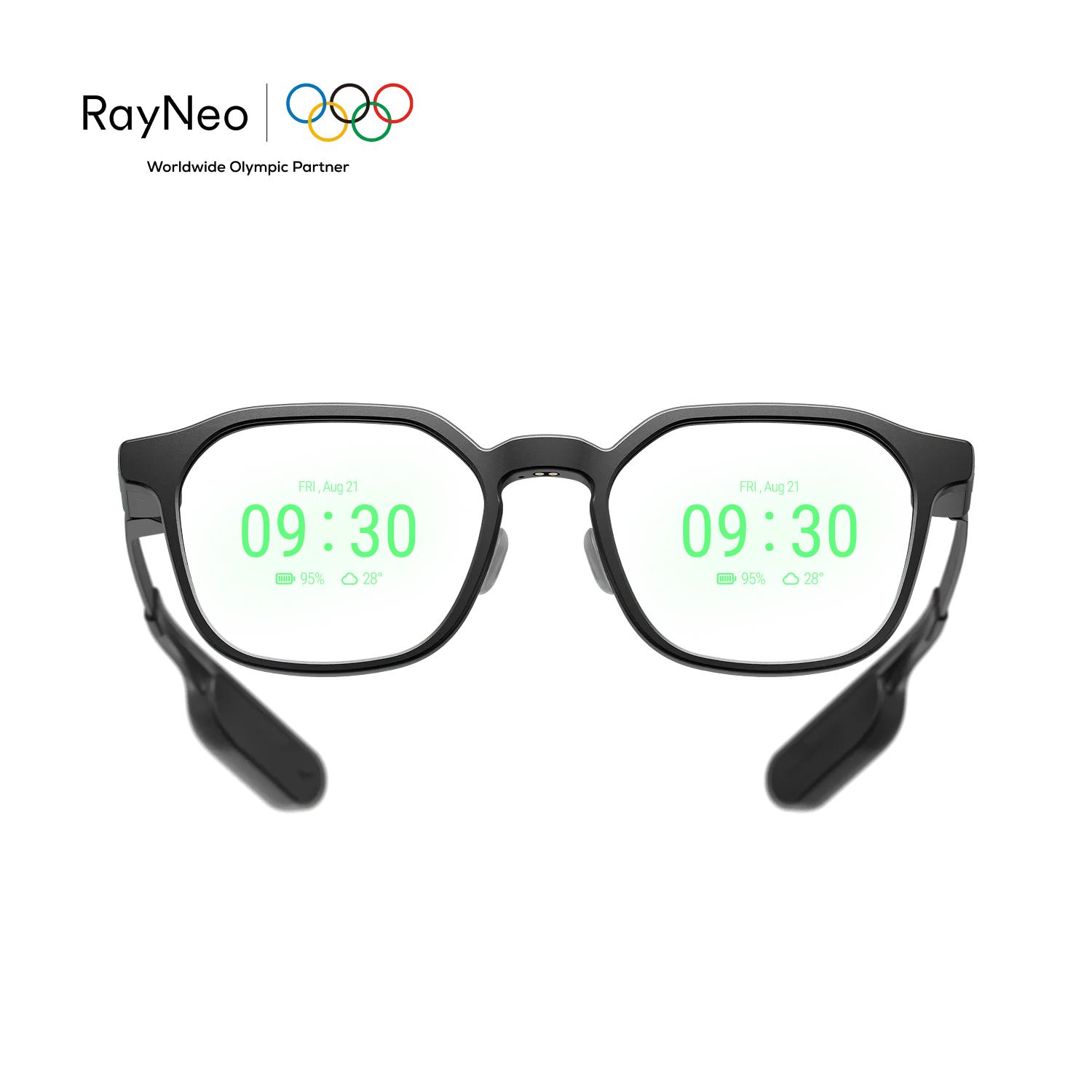
RayNeo iO
Reference
From $449
Camera-free smart glasses that put notifications, captions, translation, prompts, and voice notes on a transparent green display.
Consumer Electronics
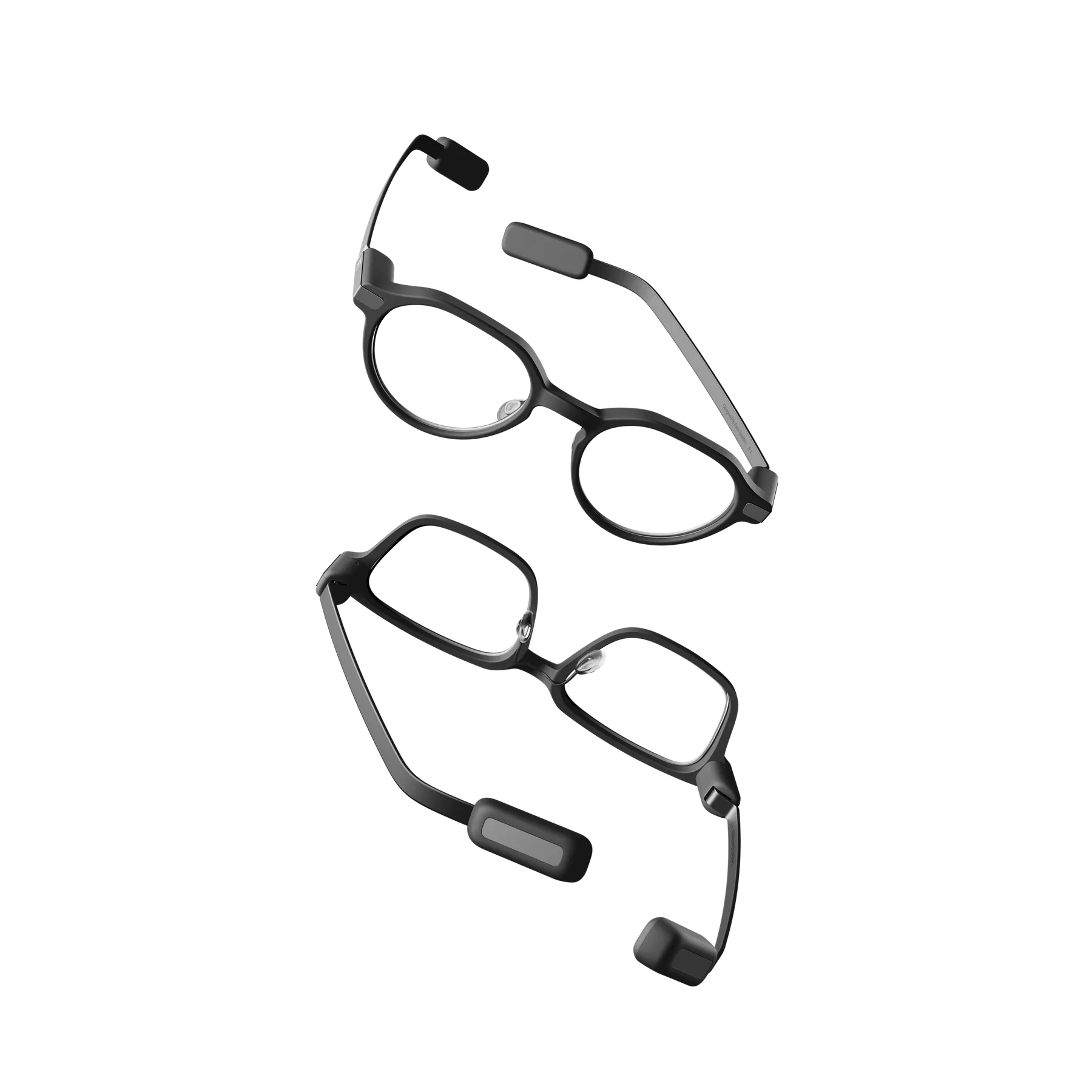
Even Realities G2 and R1
Reference
From $599
Camera-free display smart glasses with an optional ring controller for everyday prompts.
Consumer Electronics
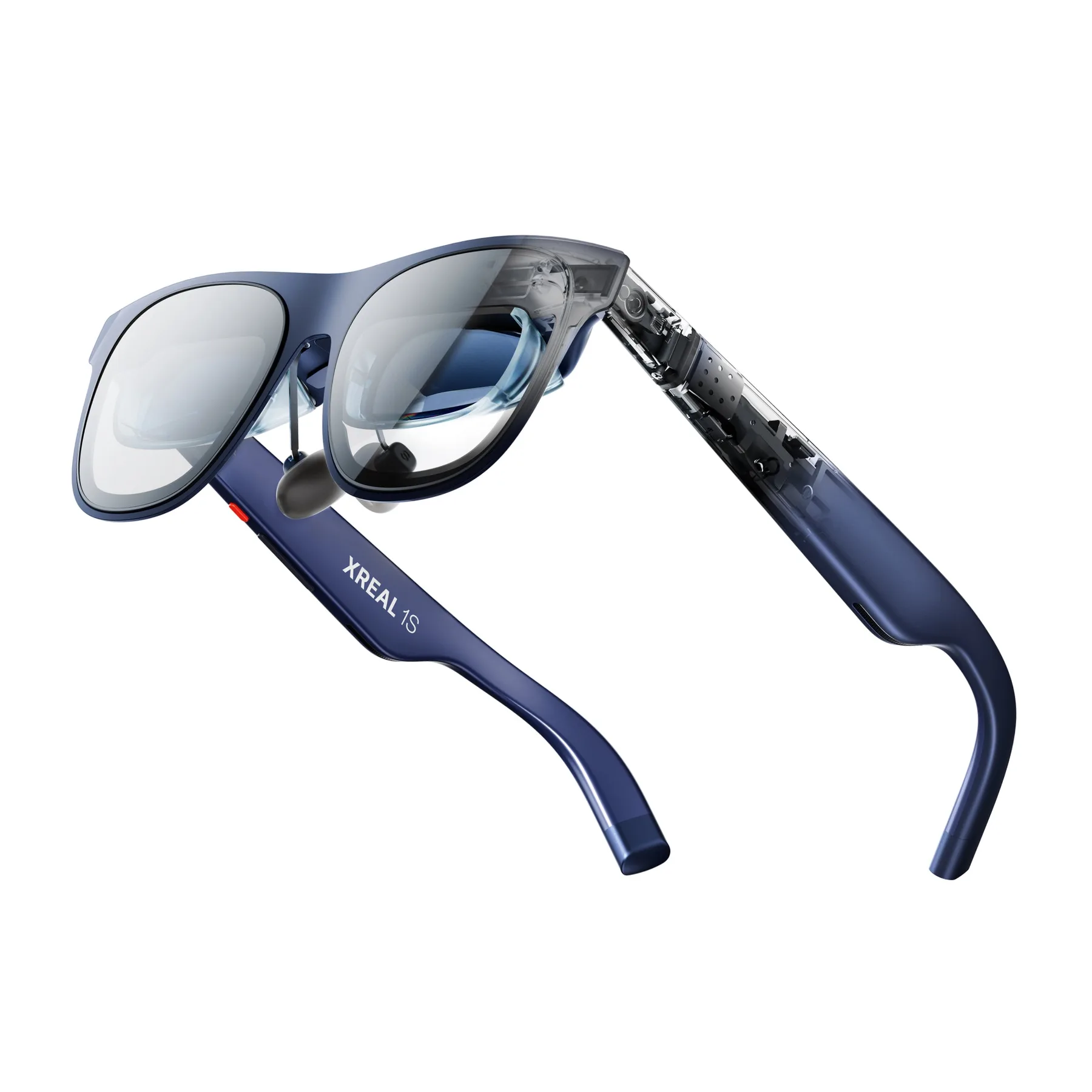
XREAL 1S
Reference
$449.00
AR display glasses with X1 chip, 120 Hz visuals, native 3DoF, and low-latency positioning.